2002-06-25
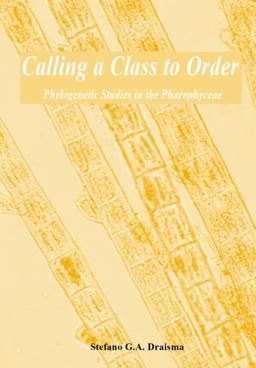
Calling a Class to Order: Phylogenetic Studies in the Phaeophyceae
Publication
Publication
‘Algae’ is the common name for a diverse polyphyletic assemblage of photosynthetic prokaryotic and eukaryotic lineages that occur in virtually all imaginable habitats. Among the eukaryotic, multicellular macrophytes or seaweeds, three main groups are recognised on the basis of their photosynthetic pigmentation (Ben Ali et al. 2001), viz. the Chlorophyta (green algae), Rhodophyta (red algae), and Chromophyta (brown and golden-brown algae). The latter group, which is paraphyletic, includes many unicellular phytoplankton which are further subdivided into many smaller lineages (compare circumscriptions and terminology between van den Hoek et al. [1995] and Graham and Wilcox [2000]) on the basis of cell coverings, specialised pigments, plastid and flagellar ultrastructure, and phylogenies based on comparative DNA sequences (Bhattacharya et al. 1992, Leipe et al. 1994, Bhattacharya and Medlin 1995, Medlin et al. 1997, Cavalier-Smith 1998, Ben Ali et al. 2001). The Phaeophyceae or brown algae belong to this last group. One of the brown algal orders for which the evolutionary history has remained unexplored is the Sphacelariales. This order has been variously considered as relatively primitive to relatively advanced based on the significance attached to morphological complexity and the mode of tissue formation. Moreover, the monophyly of this order has not been established nor its position within the Phaeophyceae. Therefore, the first task of the thesis was to ‘call the class to order’. The extensive culture collection of Sphacelariales specimens available at the Universiteit Leiden branch of the Nationaal Herbarium Nederland provided an excellent opportunity to undertake such a study. The subsequent analyses presented in this thesis were undertaken in a descending hierarchical order from class to species. One of the major hindrances in algal taxonomy is the presence of relatively few diagnostic, morphological characters combined with high levels of convergence (= homoplasy). This makes identification difficult and has resulted in the proliferation of different circumscriptions based on taxonomic opinion rather than formal analyses. The only way around the so-called ‘low morphology’ problem is via the addition of comparative DNA sequence analysis. Although sequence data are also subject to homoplasy in varying degrees, their independence from morphology provides a basis from which to evaluate both the diagnostic and phylogenetic value of particular morphological characters. Taken together, morphological and molecular data sets provide the standard for modern taxonomic and phylogenetic studies. The aims of this thesis were to: (1) explore evolutionary relationships within the Phaeophyceae; (2) determine the position of the Sphacelariales within the brown algae; (3) establish the (non)monophyly of the Sphacelariales; (4) examine species radiations within the Sphacelariales; and (5) reassess the role of morphological characters in the taxonomy and classification of this ecologically broad group.
| Additional Metadata | |
|---|---|
| P. Baas (Pieter) , W.F. Prud’homme van Reine (Willem) | |
| Organisation | Staff publications |
|
Draisma, S. (2002). Calling a Class to Order: Phylogenetic Studies in the Phaeophyceae. |
|